
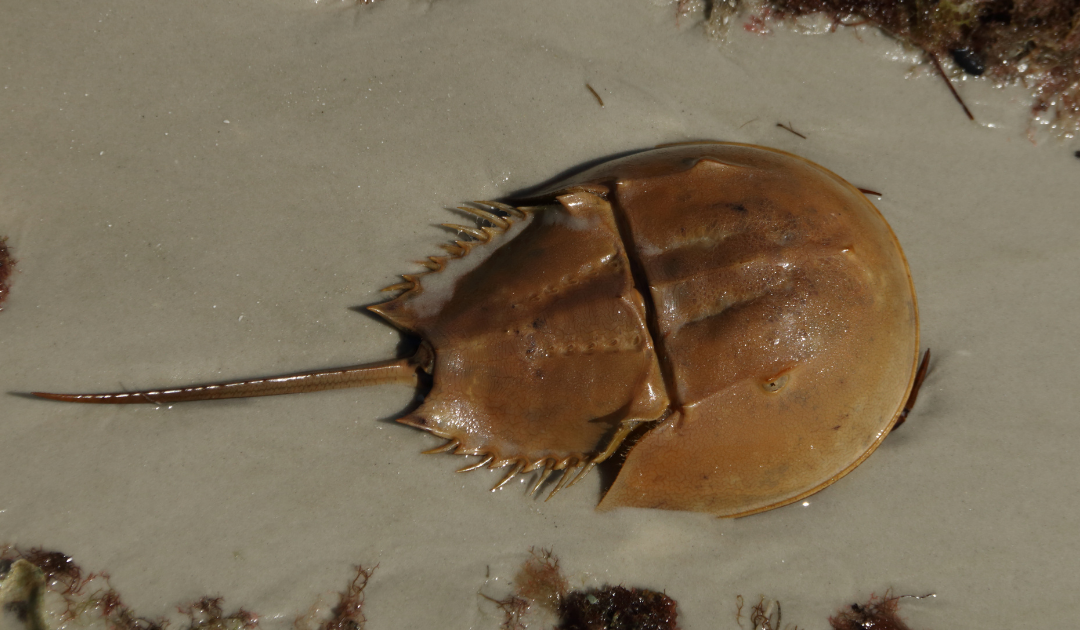
Last week, New York State took a major step forward in marine conservation when Governor Kathy Hochul signed the Horseshoe Crab Protection Act into law. The legislation establishes a three-year transition period that will phase out the harvesting of horseshoe crabs for commercial and biomedical purposes, with a full prohibition taking effect in 2029.
This decision marks a significant reversal from 2024, when the same bill was vetoed amid concerns about fisheries management and industry impacts. Since then, advocates, scientists, and lawmakers continued to push for stronger protections—arguing that existing regulations were not enough to reverse population declines.
Why Horseshoe Crabs Matter
Horseshoe crabs are often called “living fossils,” having existed for more than 400 million years. But their value goes far beyond their ancient lineage.
They are a keystone species, meaning many other species depend on them to survive. Each spring, horseshoe crabs spawn along Long Island’s shores, laying millions of eggs that provide a critical food source for migratory shorebirds—most notably the red knot, a species listed as threatened in New York. Without access to these nutrient-rich eggs, red knots struggle to complete their long migration.
The Atlantic States Marine Fisheries Commission has classified the horseshoe crab population as “poor” since 2019, citing overharvesting for bait and biomedical use as major contributors to the decline.
A Science-Based Policy Shift
Assemblymember Deborah Glick, chair of the Assembly Environmental Conservation Committee and lead sponsor of the bill, emphasized that horseshoe crabs are “now struggling to survive the impacts of human activity.” The new law reflects growing recognition that incremental limits and quotas have not been enough to protect this species—or the ecosystems that rely on it.
Environmental organizations across the state welcomed the news, calling the law a long-overdue course correction that prioritizes ecosystem health and biodiversity.
What This Means for Long Island and Beyond
On Long Island, horseshoe crabs are a familiar and iconic presence during spawning season. Their protection supports not only wildlife but also the broader health of coastal waters that sustain fisheries, recreation, and local economies.
The phase-out timeline allows for transition and adaptation, while sending a clear message: the long-term health of our bays and estuaries must come first.
Looking Ahead
Protecting horseshoe crabs is about more than saving one species—it’s about safeguarding the intricate web of life that defines our coastal ecosystems. With this law, New York joins a growing movement toward science-driven, precautionary marine management.
For a species that has survived for hundreds of millions of years, this moment offers hope that horseshoe crabs will continue to play their vital role in our waters for generations to come.